
Introduction
Imagine going about your day when suddenly, without warning, your heart starts racing, you can’t catch your breath, and an overwhelming sense of dread washes over you. You might feel like you’re having a heart attack, losing control, or even dying. Then, just as suddenly as it began, the feeling passes.
This is a panic attack — and for millions of people, these episodes are a recurring reality. When panic attacks become frequent and the fear of having another one starts controlling your life, it’s called panic disorder. The good news is that this condition is highly treatable.
What Is a Panic Attack?
A panic attack is a sudden episode of intense fear that triggers severe physical reactions when there is no real danger or apparent cause. These attacks can be frightening and often feel like a medical emergency.
Key characteristics of a panic attack:
-
Symptoms usually peak within 10 minutes
-
Attacks typically last 15-20 minutes
-
They can happen at any time — while driving, at work, during sleep, or in social situations
Panic attacks themselves are not dangerous, though they can significantly affect your quality of life.
What Is Panic Disorder?
Not everyone who has a panic attack has panic disorder. Panic disorder is diagnosed when:
-
You have recurrent, unexpected panic attacks
-
At least one attack has been followed by one month or more of:
-
Ongoing worry about having another attack
-
Continued fear about the consequences of an attack (e.g., losing control, having a heart attack, or “going crazy”)
-
Significant changes in behavior, such as avoiding situations you think may trigger an attack
-
Panic disorder affects approximately 2-3% of the population each year, with women being about twice as likely as men to develop it. It usually begins in late adolescence or early adulthood.
Symptoms of Panic Attacks and Panic Disorder
Physical Symptoms
During a panic attack, you may experience at least four of the following:
-
Rapid, pounding heart rate or palpitations
-
Sweating
-
Trembling or shaking
-
Shortness of breath or a feeling of being smothered
-
A sensation of choking
-
Chest pain or discomfort
-
Nausea or abdominal pain
-
Dizziness, lightheadedness, or faintness
-
Numbness or tingling sensations
-
Chills or hot flashes
-
Headache
Emotional and Cognitive Symptoms
-
Sense of impending doom or danger
-
Fear of losing control or “going crazy”
-
Fear of dying
-
Feelings of unreality or detachment from yourself (depersonalization)
-
Feelings of detachment from the environment (derealization)
Why Do Panic Attacks Happen?
Panic attacks and panic disorder result from a combination of biological and psychological factors:
Biological Causes
-
Brain chemistry: Imbalances in neurotransmitters like serotonin can cause anxiety responses to occur without a real threat
-
Genetics: More than one-third of people with panic disorder have a family member with the condition
-
Overactive stress response: The body’s “fight-or-flight” system may be overly sensitive, triggering panic responses even without danger
Environmental and Psychological Triggers
-
Stressful life events: Major changes, losses, or traumas
-
Childhood adversity: Difficult experiences such as abuse or neglect
-
Health conditions: Thyroid issues, heart conditions, or respiratory problems
-
Stimulant use: Caffeine, amphetamines, cocaine, or certain medications
The Panic Cycle
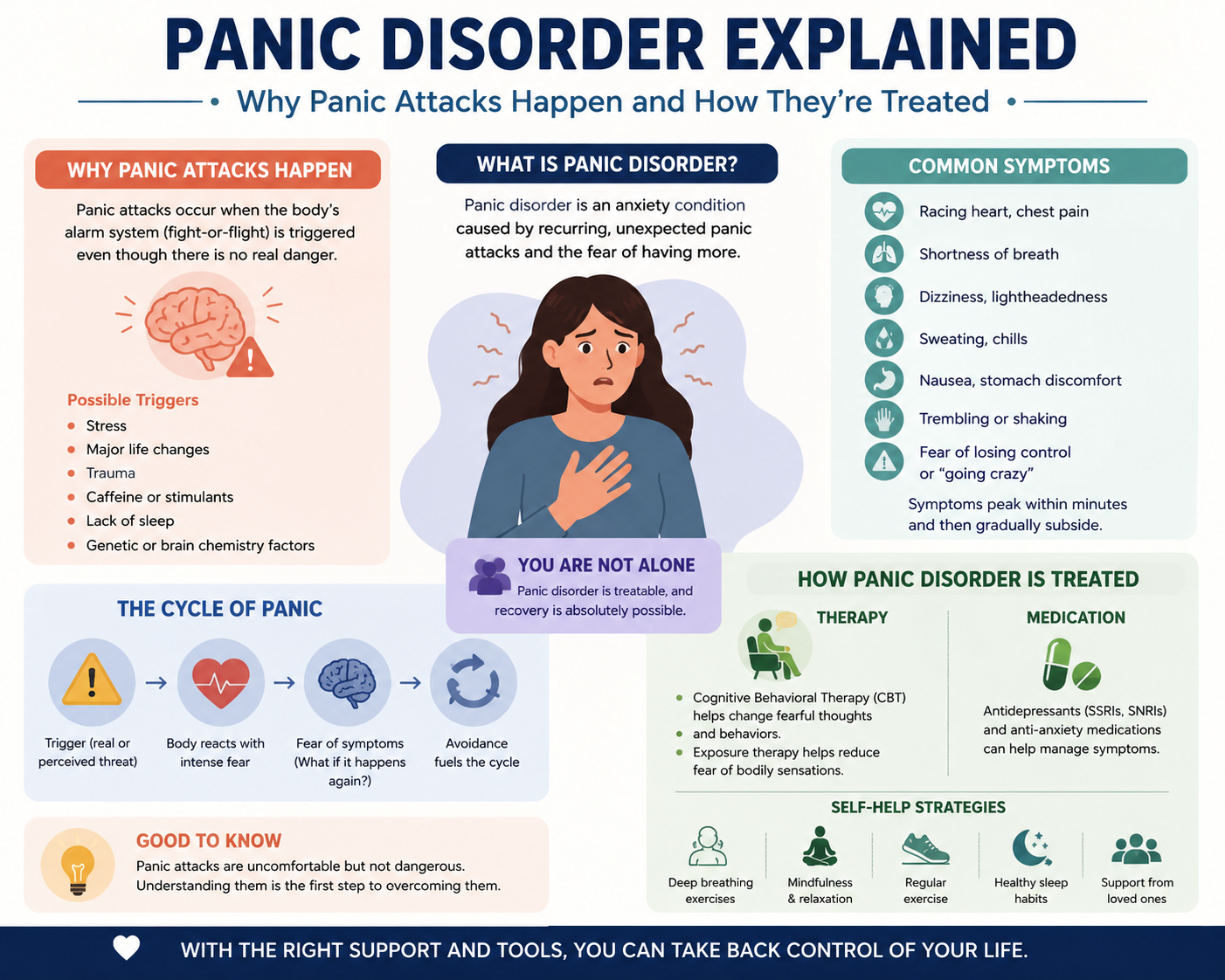
When someone experiences panic symptoms, they may misunderstand them as life-threatening — thinking a racing heart means a heart attack or shortness of breath means suffocation. This misunderstanding triggers more anxiety, which amplifies physical symptoms, creating a vicious cycle.
Diagnosing Panic Disorder
Because panic attack symptoms can mimic serious medical conditions like heart attacks, a doctor will first rule out physical disorders. This is important — chest pain, shortness of breath, and other symptoms can have medical causes that need attention.
If no physical cause is found, a mental health professional can make a diagnosis based on:
-
Your description of the attacks
-
The frequency and intensity of episodes
-
How the attacks affect your daily life
-
The presence of persistent worry about future attacks
Treatment Options for Panic Disorder
Panic disorder is highly treatable, with 70-80% of patients recovering with proper treatment. The main treatment approaches are:
Psychotherapy
Cognitive Behavioral Therapy (CBT) is considered a first-choice treatment for panic disorder. It helps you:
-
Learn that panic symptoms are not dangerous
-
Identify and change distorted thinking patterns
-
Gradually face situations you’ve been avoiding
-
Develop coping strategies
Exposure therapy is a key component, where you gradually re-create panic symptoms in a safe, controlled setting. Once you learn the sensations aren’t threatening, the attacks begin to resolve.
Mindfulness-based approaches like meditation and relaxation training can also be effective.
Medications
Several types of medication are effective for panic disorder:
First-line medications:
-
SSRIs (Selective Serotonin Reuptake Inhibitors): These are the preferred medications because they’re effective, safe, and not habit-forming. Examples include sertraline (Zoloft), fluoxetine (Prozac), and paroxetine (Paxil).
-
SNRIs (Serotonin-Norepinephrine Reuptake Inhibitors): Venlafaxine (Effexor XR) is FDA-approved for panic disorder.
Short-term options:
-
Benzodiazepines: Medications like alprazolam (Xanax) and clonazepam (Klonopin) work quickly to relieve panic symptoms. However, they can be habit-forming and are generally prescribed for short-term use only.
Important notes about medication:
-
SSRIs typically take 4-6 weeks to show full effects
-
Some people may experience temporary increased anxiety in the first few days of SSRI treatment; this usually subsides within a week
-
Never stop panic medication abruptly — always taper off under medical supervision
Combination Treatment
Many people benefit most from combining therapy and medication. The medication can help control symptoms while therapy addresses the underlying thought patterns and behaviors.
Living with Panic Disorder
Self-Care Strategies
During a panic attack, these techniques can help:
-
Deep breathing: Slow, controlled breathing helps rebalance oxygen and carbon dioxide levels
-
Mindfulness: Focus on the present moment without judgment
-
Grounding techniques: Focus on what you can see, hear, and feel around you
-
Remind yourself: The attack will pass, and you’re not in danger
Long-term Management
-
Regular exercise to reduce stress and improve mood
-
Good sleep hygiene
-
Stress management through meditation, yoga, or relaxation techniques
-
Avoiding stimulants like caffeine that can trigger attacks
Finding Professional Help
If panic attacks are affecting your quality of life, seek help from a healthcare provider. Treatment is effective, and you don’t have to suffer in silence. Start by:
-
Talking to your primary care doctor
-
Getting a referral to a mental health specialist
-
Exploring treatment options that suit your needs
Conclusion
Panic attacks are frightening, but they are not dangerous. Panic disorder is a treatable condition, and with the right combination of therapy, medication, and self-care, most people can significantly reduce their symptoms and reclaim their lives.
If you’re experiencing panic attacks, remember: you are not alone. Millions of people live with and successfully manage panic disorder. Help is available, and recovery is possible — one step, one breath, one day at a time.
Additional Resources
-
National Institute of Mental Health: www.nimh.nih.gov
-
Anxiety and Depression Association of America: www.adaa.org
-
Mayo Clinic: www.mayoclinic.org
-
Centre for Addiction and Mental Health: www.camh.ca
-
American Psychological Association: www.apa.org
