
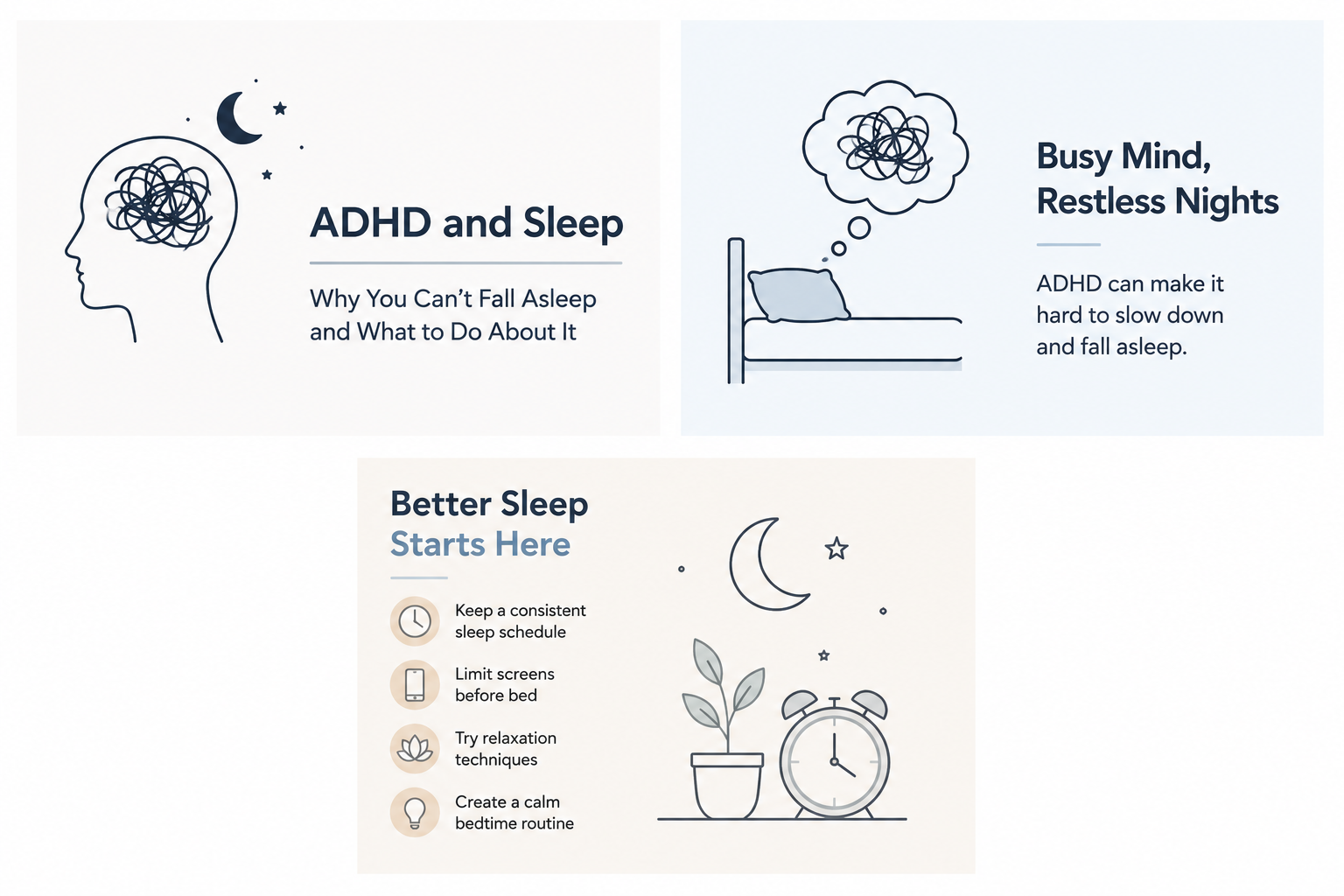
The alarm clock glows 2:00 AM. You’ve been lying in bed for hours, your body exhausted but your mind racing. This is the nightly reality for countless people with ADHD. The frustration is real—but it’s not your fault. Your brain is wired differently, and understanding why is the first step to finding relief.
This guide explores the science behind ADHD and sleep issues, offering practical strategies grounded in the latest research to help you finally get the rest you need.
📌 Key Takeaway: The core issues—a delayed body clock, a restless body, and a racing mind—are rooted in how the ADHD brain works. Effective strategies combine smart medication timing, targeted sleep hygiene, and approaches that directly address these biological and behavioral patterns.
Why ADHD Disrupts Sleep: The Science
At least 50% of children and adults with ADHD report substantial sleep problems (CMAJ). This isn’t a coincidence—it’s a direct result of how the ADHD brain is wired. Research has identified specific neural underpinnings that link ADHD and sleep disturbances (NCBI).
Disrupted Brain Pathways
The cortico-striatal-thalamo-cortical (CSTC) pathway, a key circuit in the brain, appears to be disrupted in people with ADHD (PubMed). This pathway is involved in regulating both executive functions and sleep. Dysregulation of neurotransmitters like dopamine and GABA in this circuitry is thought to contribute to sleep problems (ScienceDirect). This means that sleep issues are not just a side effect of ADHD but may be an intrinsic part of the condition (GoodRx).
The Problem of Hyperarousal
Many people with ADHD experience a state of “hyperarousal,” a combination of racing thoughts and physical restlessness (NCBI). This is not simply a matter of willpower; it’s a result of ADHD affecting both mental activity and physical arousal. Research shows people with ADHD often experience heightened cognitive activity in the evening, with thoughts jumping rapidly as the brain should be winding down. Physically, they may have increased movement and a delayed sleep onset due to sustained muscle tension (GoodRx).
This creates a vicious cycle: a fast brain feeds physical tension, and physical tension keeps the mind stimulated (GoodRx). This increases sleep-onset latency, meaning it takes much longer to fall asleep (CMAJ).
Common Sleep Problems in ADHD
People with ADHD experience a range of sleep disorders at much higher rates than the general population.
- Insomnia: The most common issue, affecting over 40% of adults with ADHD (CMAJ). Symptoms include taking more than an hour to fall asleep, waking up throughout the night, and not feeling rested in the morning (GoodRx).
- Delayed Sleep-Wake Phase Disorder: People with ADHD often have a “night owl” chronotype. This is linked to a delayed circadian rhythm, where melatonin is released later than it should be, pushing the natural sleep window later into the night (NCBI).
- Restless Legs Syndrome (RLS): RLS is highly prevalent, occurring in up to 30% of adults with ADHD (PubMed). The unpleasant sensations and urge to move can make it very difficult to fall asleep.
- Obstructive Sleep Apnea (OSA): OSA is also more common, with a prevalence of 20-30% in adults with ADHD (CMAJ). This condition causes breathing pauses during sleep, leading to fragmented and poor-quality rest.
- Narcolepsy: While less common, this neurological disorder causing excessive daytime sleepiness is also associated with ADHD (NCBI).
These sleep issues can mimic or worsen ADHD symptoms (GoodRx). A person with untreated OSA, for example, may present with symptoms of inattention that look exactly like ADHD (GoodRx).
ADHD Medications and Sleep

While ADHD medications are essential for managing symptoms, they can also interfere with sleep. Stimulants increase dopamine and noradrenaline, which can make it harder to fall asleep if taken too late in the day (GoodRx). Insomnia is one of the most common side effects of stimulant medications, especially in children (GoodRx).
However, it’s not always a straightforward problem. Long-acting stimulants are generally recommended as the first-line treatment for ADHD, even for patients with sleep disturbances (CMAJ). They can help prevent evening symptom rebound, which might otherwise lead to insomnia (CMAJ).
Tips for Timing Your Medication
Here are strategies for managing medication’s effect on sleep (GoodRx):
- Take long-acting stimulants early in the morning: Extended-release versions are best taken soon after waking to prevent them from stretching into the evening (GoodRx).
- Take the final dose of short-acting stimulants by mid-afternoon: These typically last around four hours, so avoid “booster” doses too close to bedtime (GoodRx).
- Consider non-stimulant options: Atomoxetine provides 24-hour coverage without sharp activating peaks, and guanfacine may be taken at night due to its calming effects (GoodRx).
- If insomnia persists, ask your doctor about a lower evening dose or a different medication: You may need to experiment with which medication you take, the timing, or the formulation (GoodRx).
- Clonidine: Starting at 0.1 mg, taken one hour before bedtime, can help alleviate stimulant-related insomnia in some patients (GoodRx).
💡 Paradoxical Effect: Some people find that their stimulant medication actually calms them and allows them to fall asleep. If your symptoms are well controlled during the day, your brain may be less likely to be in overdrive at night, promoting better sleep (GoodRx).
ADHD-Friendly Sleep Hygiene Strategies

Standard sleep hygiene advice often falls short for people with ADHD. Here are strategies tailored to the unique challenges of the ADHD brain.
1. Support Your Circadian Rhythm
- Get bright light first thing in the morning: Exposure to bright morning light helps set your circadian rhythm, making it easier to fall asleep at an earlier time at night (GoodRx).
- Keep a consistent wake-up time—even on weekends: Your body clock thrives on predictability (GoodRx).
- Limit light exposure within 3 hours of bedtime: This helps your brain produce melatonin naturally (GoodRx).
2. Build a Calming Evening Routine
- Dim the lights in the last hour of the day: This signals to your brain that rest is approaching (GoodRx).
- Put down screens at least 30-60 minutes before bed: Blue light from phones and devices interferes with melatonin production. Choose activities like reading, listening to music, or journaling instead (GoodRx).
- Avoid intense stimulation: Skip intense gaming, fast-paced TV, or heavy exercise in the hour before bed (GoodRx).
3. Calm the Body and Mind
- Get regular exercise: Research shows that exercise, especially 150 minutes of moderate-to-intense activity per week, can help reduce ADHD symptoms and improve sleep (GoodRx).
- Consider behavioral sleep interventions: Cognitive Behavioral Therapy for Insomnia (CBT-I) can help you identify how your thoughts, feelings, and behaviors contribute to sleep problems (GoodRx).
- Try a weighted blanket: Studies have shown that using weighted blankets can improve sleep quality and reduce sleep-onset latency in individuals with ADHD, also improving daytime functioning and emotional regulation (NCBI).
Resetting Your Circadian Rhythm

If you have a delayed sleep phase, small, gradual shifts are key. Moving your bedtime and wake time in 15-minute increments, combined with consistent morning light, can collectively shift your sleep window earlier (GoodRx).
Melatonin and Light Therapy
For delayed sleep-phase syndrome, evidence-based approaches include (CMAJ):
- Immediate-release melatonin (0.5mg): This is taken 3 hours before your habitual sleep onset and advanced by 1 hour earlier each week for 3-4 weeks to improve circadian rhythm and ADHD symptoms (CMAJ).
- For primary insomnia: 2-6 mg of immediate-release melatonin at bedtime may help, although evidence is limited (CMAJ).
- Thirty minutes of bright light therapy in the morning: This can help shift your body clock earlier (CMAJ).
Behavioral interventions are also highly effective, with studies showing sustained benefit at 12 months (CMAJ).
Frequently Asked Questions (FAQ)
1. Is insomnia a symptom of ADHD or a side effect of medication?
It can be both. Insomnia is a common symptom of ADHD itself and is also a frequent side effect of stimulant medications (GoodRx). It’s important to work with your doctor to determine which factor is the primary cause and to find solutions.
2. How many hours of sleep do people with ADHD need?
There is no single answer, but most adults need 7-9 hours. The best approach is to focus on feeling rested rather than a specific number. Treating underlying sleep disorders can significantly improve sleep quality and duration (GoodRx).
3. Can not getting enough sleep make ADHD symptoms worse?
Yes. Not getting enough sleep makes ADHD symptoms worse. Good sleep is crucial for focus, impulse control, and memory. In one study, adults with insomnia or less than 6 hours of sleep a night had increased symptoms of hyperactivity and inattention (GoodRx).
4. What’s the best sleep hygiene advice for someone with ADHD?
Tailor standard advice to the ADHD brain. This includes using bright light in the morning, limiting screen time before bed, building a consistent and calming routine, and potentially using tools like weighted blankets (GoodRx).
5. When should I take my ADHD medication to avoid sleep problems?
Most experts recommend taking long-acting stimulants early in the morning. The final dose of short-acting stimulants should be taken by mid-afternoon to avoid interfering with sleep (GoodRx). Always discuss timing with your prescriber.
🌿 Explore ADHD Medications & Sleep Aids
Find medications that may help manage ADHD symptoms and support better sleep. Always consult your doctor before making any changes.
BuyYourStuff.us →
